

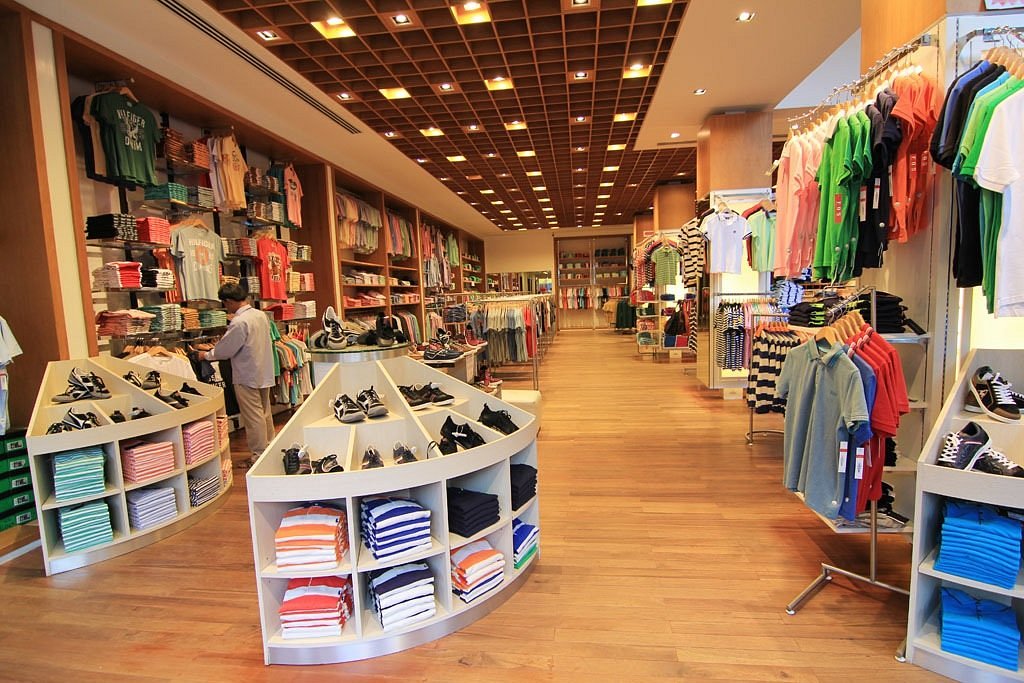
Every weekend, millions of shoppers browse outlet centers under the impression that they are sifting through high-end department store leftovers, overstocked luxury shipments, and off-season designer boutique transfers. The marketing surrounding outlet malls heavily reinforces this fantasy, presenting rows of designer logos at discounts that seem almost irresponsible.
However, modern retail economics abandoned the clearance-house model years ago. Today, the vast majority of items hanging on outlet racks were manufactured specifically for those racks. They were designed on separate assembly lines, cut from cheaper textiles, and assembled with less labor-intensive techniques. Brands intentionally protect their flagship boutiques from price erosion by creating these parallel, lower-tier collections.
The good news for savvy shoppers is that apparel companies leave a paper trail. Due to internal logistics, inventory tracking systems, and past consumer protection settlements, brands mark their made-for-outlet merchandise with specific symbols, numbering schemes, and tag constructions. Once you learn how to decode these subtle markers, you can immediately tell whether a garment is a genuine boutique transfer or an intentional outlet production run.
The Typography and Language of Price Hangtags
Before examining brand-specific symbols, you can glean a wealth of information from the overall design and wording of the cardboard hangtag attached to an item. Brands rely heavily on visual cues and psychological pricing on these tickets.
The dead giveaway on almost every made-for-outlet price tag is the phrase Compare At printed directly above an inflated figure. When you see a tag that reads “MSRP $118” or simply lists a retail price that has been struck through with a red markdown line, there is a reasonable chance the garment once existed in a mainline retail catalog. Conversely, when a tag uses the words “Compare At $98” beside an “Our Price $39.99,” that higher dollar amount is a hypothetical estimate created by the manufacturer’s pricing team. In most cases, that exact piece was never offered for sale at the higher price in any boutique anywhere in the country.
Look closely at the card stock and printing method of the tag itself. Flagship retail items typically feature heavier, textured card stock, custom metallic eyelets, woven string attachments, or embossed brand lettering. Factory lines cut packaging costs across the board. Their tags tend to be thin, glossy, and attached with standard plastic swift-tach fasteners. If the tag feels flimsy and features uniform machine printing across all fields—including the supposed original price—it was printed in the factory specifically for an off-price display.
Brand-Specific Decoders on Collar and Fabric Labels
The most reliable confirmation of an item’s origin is found sewn directly into the neckline, waistband, or interior lining. Many of the most popular American mall and luxury brands use standardized visual shorthand to separate their retail goods from their factory collections.
Gap, Banana Republic, and Old Navy
The Gap Inc. family of brands provides one of the clearest visual keys in the retail industry. If you inspect the cloth label sewn into the neck of a shirt or the inner waist of trousers at Banana Republic Factory or Gap Factory, look directly beneath the brand lettering.
Made-for-outlet garments feature three small embroidered diamonds or squares arranged in a horizontal row or triangular cluster beneath the name. If those three dots are present, the item was designed from scratch for the factory store. A genuine retail transfer from a mainline Banana Republic or Gap store will feature the standard brand name without any symbols underneath, often paired with an auxiliary red clearance tag applied over the original barcode.
J.Crew and J.Crew Factory
J.Crew uses a convention nearly identical to that of Gap Inc. On garments produced exclusively for J.Crew Factory, the woven cloth label features two small dots or asterisks positioned directly below the J.Crew name.
Mainline retail items sold in standard J.Crew stores carry only the clean brand name on the label. Furthermore, the paper hangtags on J.Crew Factory goods typically state “J.Crew Factory” explicitly at the top of the card, whereas retail pieces simply read “J.Crew.” If you find an item in a factory store that lacks the two dots and carries a standard retail tag with multiple layered discount stickers, you are holding a rare boutique return or retail transfer.
Coach
Coach has long operated one of the most lucrative outlet divisions in accessories, and their identification system has evolved alongside their popularity. To verify the origin of a Coach handbag or wallet, look inside for the leather patch known as the creed patch, or locate the small white fabric care tag tucked into an interior pocket seam.
On older and vintage bags, factory-exclusive items are identified by the style number stamped on the creed patch: the registration number will begin with the letter F preceding the style digits. On modern Coach bags, the creed patch is often unnumbered, and the style code is found on a tiny white tag inside the interior pocket. Outlet-exclusive pieces frequently feature style numbers that start with an F or a C followed by specific numerical ranges.
More importantly, if a full-line retail boutique transfers an unsold bag to an outlet store, Coach often stamps a tiny, indented bullseye circle into the leather of the creed patch near the top right corner. That indented circle signifies that the bag was originally built to boutique standards but marked out of full-price inventory.
Kate Spade
Kate Spade distinguishes its outlet merchandise through subtle branding variations and style codes. On the exterior of an authentic retail bag, the brand mark usually consists of an applied metal plaque or a clean, embossed foil stamp reading “kate spade NEW YORK” with the signature metal spade positioned above it.
On items produced for Kate Spade Outlet, the spade logo is often printed directly onto the leather or integrated into a small, simplified fabric patch. If you check the product tag or inner registration slip, look at the style number. Outlet-exclusive pieces almost universally carry style numbers beginning with the prefixes WKRU or WLRU (standing for Women’s Kate Retail Outlet), whereas full-line boutique bags historically utilized style codes beginning with PXRU or PWRU.
Brooks Brothers
Brooks Brothers separates its mainline heritage tailoring from its outlet distribution using an archival reference. Garments tailored specifically for the factory chain are branded under the 346 label.
The number 346 is a historical nod to the brand’s historic flagship address at 346 Madison Avenue in New York City, but in the modern retail network, it serves exclusively as the identifier for lower-tier manufacturing. Mainline Brooks Brothers suits, shirts, and ties will feature the standard Golden Fleece sheep logo or labels reading “1818,” “Golden Fleece,” or simply “Brooks Brothers” without the 346 designation. The 346 line utilizes fused interlinings, lower thread counts, and synthetic blends that differ significantly from the brand’s traditional construction methods.
Department Store Off-Price Chains: Nordstrom Rack and Saks OFF 5TH
Navigating department store off-price outlets requires an entirely different approach because these retailers carry a genuine hybrid inventory: roughly half of their stock consists of actual overstock from full-line department stores, while the other half is manufactured specifically for off-price distribution.
At Nordstrom Rack, pay attention to the price tag format. Items made specifically for Nordstrom Rack feature a clean, uniform white tag with a barcode and standard computerized lettering. A genuine transfer from a full-line Nordstrom store, however, almost always carries an original retail tag that has been modified. Look for handwritten price adjustments, a torn perforated bottom tab, or bright red clearance stickers placed directly over the original Nordstrom department barcode.
At Saks OFF 5TH, pure clearance transfers from luxury Saks Fifth Avenue stores frequently feature yellow markdown stickers layered on top of black or dark gray boutique tags, while made-for-outlet items carry a white tag branded directly with the “Saks OFF 5TH” logo.
Checking the Inner Seam Care Label
When collar labels have been altered, cut, or designed without obvious graphic symbols, the interior side-seam care tag provides the definitive truth. Federal trade regulations require apparel manufacturers to list fiber content and manufacturer identification accurately on these tags, making them much harder for marketing departments to obscure.
Look first at the RN (Registered Identification Number), which identifies the legal business entity that produced the garment. While the RN will typically match the parent corporation, the smaller alphanumeric codes printed around it reveal the production run.
Many brands print a specific season code on the reverse side of the care tag, such as SP25 for Spring 2025 or FA24 for Fall 2024. Beside or beneath this seasonal stamp, made-for-outlet items often include a factory code sequence containing an “F,” “OUT,” or a distinct factory vendor code. If the season stamp indicates a garment was produced in the exact same month it hit the outlet sales floor, it is a dedicated outlet piece. True retail clearance items typically display a season code from at least one or two seasons prior, reflecting the time it took for the piece to sit in a flagship store, go through multiple markdown cycles, and finally ship to a clearance hub.
The care tag also settles any debates about material quality. If a rack of sweaters in an outlet store displays a prominent sign boasting luxury fibers, flipping over the care tag often reveals that the garment is made of 55% cotton, 40% nylon, and only 5% cashmere or silk. Brands routinely use nominal percentages of premium natural fibers to justify marketing claims on hangtags, while the interior care label confirms the overwhelmingly synthetic composition of the piece.
Developing a Five-Second Tag Scanning Routine
Spotting the difference between an authentic retail bargain and an intentional outlet product does not require memorizing every internal inventory code in the retail sector. It simply requires a systematic physical inspection before you carry any item to the checkout counter.
Begin by running your thumb over the neckline label to check for the telltale symbols: three dots at Banana Republic or Gap, two dots at J.Crew, or a 346 sub-brand at Brooks Brothers. Next, glance at the price ticket to verify whether the original reference price uses the phrase “Compare At” or shows a genuine, stamped retail markdown. Finally, flip to the interior side seam to confirm the fiber breakdown and look for multi-layered clearance stickers.
Once you know how to read these markers, you can shop with clarity. There is nothing wrong with buying a made-for-outlet shirt if the cut suits you and the price fits your clothing budget. The difference is that you will be purchasing that item based on its real, objective merit—rather than falling for the illusion of a phantom discount.

Comments are closed.