

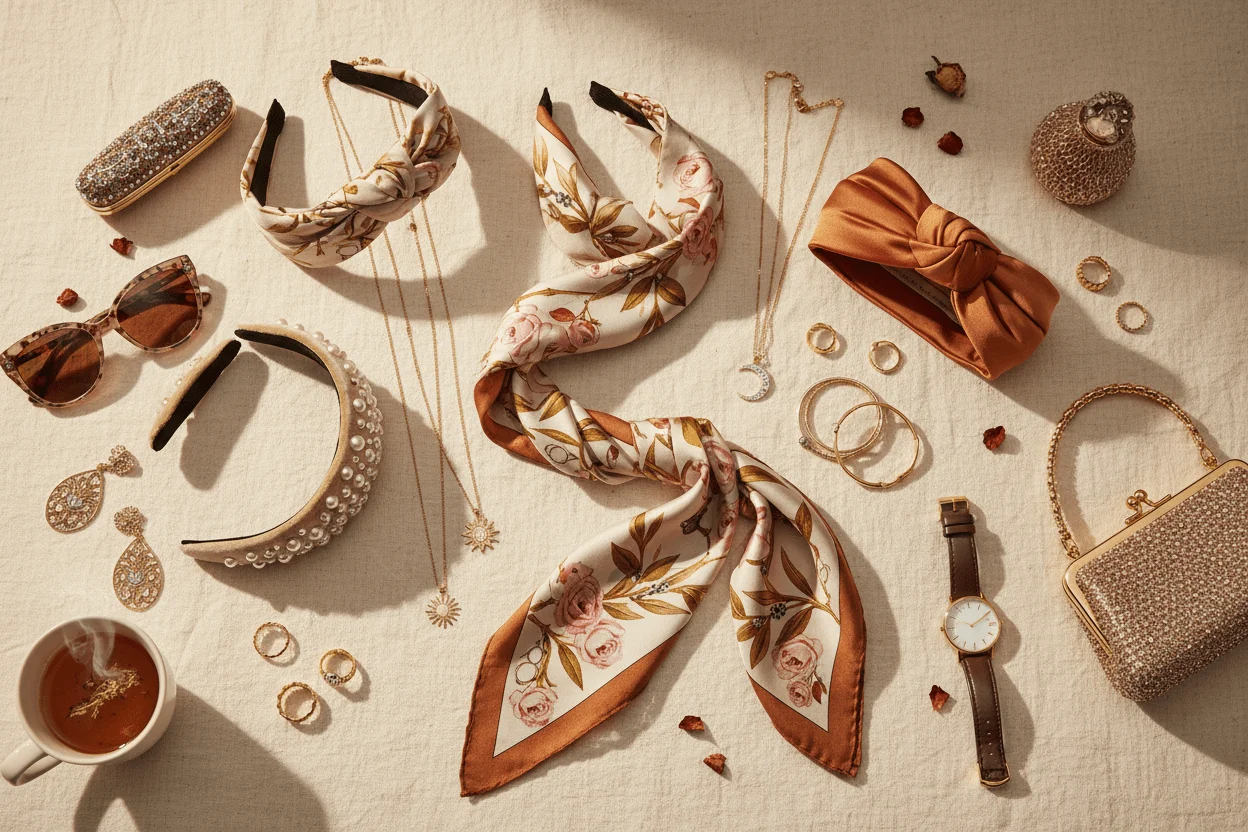
A crisp white cotton tee tucked into straight-leg denim, a minimalist black slip dress, or an oatmeal-colored cashmere sweater paired with tailored trousers form the backbone of a functional wardrobe. These staples are dependable, flattering, and timeless. Yet in their unadorned state, they can sometimes feel unfinished, like a blank canvas waiting for pigment.
The difference between merely wearing clothes and presenting an intentional, polished outfit almost always comes down to accessories.
Accessories are the connective tissue of personal style. They establish context, convey mood, and dictate formality. They have the unique power to take an outfit from a casual morning coffee run to an evening dinner without requiring a single garment change. Learning how to accessorize is not about piling on every shiny object in your jewelry tray; it is an exercise in visual balance, proportion, texture, and knowing exactly where to direct the eye.
The Anchor Rule: Establishing a Clear Visual Focal Point
The most common mistake people make when accessorizing is creating visual competition. When you wear a chunky layered necklace, massive shoulder-grazing earrings, a stack of loud bangles, an oversized belt buckle, and a heavily embellished bag all at once, the human eye has nowhere to rest. The individual beauty of each piece is swallowed by visual noise.
To build a cohesive look, rely on the anchor rule. Choose one primary statement piece to serve as the hero of your ensemble, and let every other accessory play a quiet, supporting role.
If your anchor is a pair of sculptural, modern gold drop earrings, pull your hair back into a low chignon and leave your neckline completely bare. If your anchor is an ornate, vintage brass buckle belt cinching an oversized trench coat, keep your jewelry understated with simple huggie hoops and a delicate signet ring. By giving a singular hero piece the negative space it needs to breathe, you create an effortless focal point that looks confident rather than chaotic.
Mastering Metal Tones and Jewelry Proportions
Jewelry sits directly against your skin and frames your face, making it the most intimate category of accessories. Getting the proportions right requires understanding how metal weights interact with the construction of your clothing.
The Geometry of Necklines and Necklaces
A necklace should complement the architecture of your neckline rather than fight against it.
-
Crew Necks and High Collars: High, circular necklines offer an expansive, solid backdrop. They look best balanced with a chunky, flat-laying collarbone chain, a tennis necklace, or a long pendant on a twenty-four-inch chain that creates an elongated vertical line down the torso.
-
V-Necks and Unbuttoned Collars: Open necklines naturally draw the eye downward. Mirror that diagonal slope by layering delicate chains of varying lengths—such as a fourteen-inch choker paired with a sixteen-inch fine cable chain and an eighteen-inch medallion. Ensure the lowest pendant sits above the lowest point of your neckline so it does not slip awkwardly beneath the fabric.
-
Square and Sweetheart Necklines: These angular necklines carry significant structural presence on their own. They pair best with collarbone-grazing pendants or completely bare collarbones balanced by substantial stud earrings.
Mixing Metals with Modern Intention
The outdated rule dictating that you must wear exclusively gold or exclusively silver is officially retired. In fact, wearing only one metal tone from head to toe can sometimes appear overly coordinated and rigid.
Mixing metals injects an easy, collected-over-time character into a simple wardrobe. The secret to intentional mixing is to use a two-tone bridge piece. A luxury watch combining stainless steel with yellow gold links, or a ring that weaves silver and brass bands together, serves as visual justification for wearing both white and yellow metals across your earrings, rings, and bag hardware.
Keep the finishes consistent even when the colors differ. Pair polished silver with polished gold, or matte brushed silver with satin brass. Matching the surface sheen maintains underlying harmony across differing metallic shades.
Belts as Structural Architecture, Not Just Utility
Belts are routinely relegated to an afterthought, treated solely as functional straps designed to keep loose trousers from sliding down the hips. When used strategically, however, a quality belt is one of the most transformative architectural tools in your styling arsenal.
A belt provides a distinct boundary line that breaks up large fields of solid color. If you are wearing a monochrome column—such as a cream silk blouse tucked into cream wide-leg trousers—a chocolate brown croc-embossed leather belt instantly grounds the look, delineating the waistline and adding tactile richness.
Beyond simple belt loops, use leather belts to alter the silhouette of unstructured garments:
-
Cinching Outerwear and Boxy Tailoring: Take an oversized, masculine blazer and fasten a medium-width leather belt firmly around your natural waist over the closed lapels. This transforms a boxy, casual silhouette into a sharp, feminine hourglass.
-
Taming Chunky Knitwear: If a heavy fisherman sweater feels shapeless over a pleated midi skirt, loosely cinch a slim belt around the sweater at your waist, then gently blouse the knit fabric up and over the strap until the leather is partially hidden. You maintain cozy volume while restoring physical proportions.
When choosing belts to elevate basics, prioritize full-grain leather and understated hardware. A simple, solid brass horseshoe or square buckle in a classic one-inch to one-and-a-quarter-inch width will outlast flashy logo plates and pair seamlessly with everything from raw denim to wool suiting.
Footwear and Bags: Setting the Formality and Pace
Your shoes and handbag do not merely support your outfit; they define its social destination. You can keep your base clothing identical and completely alter the message of your outfit simply by swapping these two elements.
Consider an uncomplicated outfit consisting of a white crew-neck t-shirt and charcoal wool trousers:
-
Paired with clean, low-profile leather sneakers and a slouchy nylon crossbody bag, the ensemble reads as purposeful, high-end weekend streetwear.
-
Paired with pointed-toe kitten heel mules and a structured, top-handle leather satchel, the exact same base instantly transforms into chic, gallery-ready professional attire.
-
Paired with chunky, lug-sole penny loafers and an unstructured suede tote, the outfit leans into collegiate, tailored prep.
To make an outfit feel rich and multidimensional, deliberately contrast the texture of your bag with the texture of your clothing. If you are wearing smooth, matte fabrics like cotton poplin or fine jersey, introduce accessories with tactile grit—such as suede, woven raffia, pebbled calfskin, or glossy patent leather. This contrast prevents simple clothing from appearing flat in natural daylight.
The Power of Secondary Accents: Scarves and Eyewear
When an outfit still feels like it is missing a finishing touch, look beyond traditional jewelry and leather goods to expressive micro-accents.
Silk Scarves
A small square of silk twill is one of the most versatile items a person can own. Tied in a snug, simple knot around the neck with a crew-neck sweater, it channels timeless European minimalism.
If wearing a scarf around your neck feels too formal for your routine, tie it around the base of your handbag handle, loop it through a single front belt loop on your jeans, or fold it into a thin band to secure a low ponytail. The fluid drape and subtle sheen of silk bring immediate softness to structured clothing.
Statement Sunglasses
Eyewear is the first thing people see when they look at you outdoors. A great pair of sunglasses acts as instant personal architecture, framing your bone structure and communicating effortless polish even on days when you are wearing zero makeup.
Move away from flimsy, wire-thin gas station frames and invest in substantial acetate frames with clean, geometric lines. Classic tortoiseshell softens cool-toned outfits, while stark black frames add sharp, architectural contrast to light summer linens and breezy sundresses.
The Final Polish: Knowing What to Edit Out
The art of accessorizing is governed just as much by subtraction as it is by addition. Before walking out the front door, take a step back from a full-length mirror and examine your overall silhouette.
Look for areas where items are fighting for space. If your earrings are brushing against a bulky scarf, remove the scarf or swap the drops for sleek studs. If your wrists feel heavy beneath a watch, three bracelets, and long, flared sleeves, strip back the stack until only the watch remains.
Pay close attention to negative space. Allowing clean, bare skin to show around the collarbones, wrists, and ankles keeps an outfit feeling breathable and effortless. When your accessories work in tandem with your clothing rather than shouting over it, even the simplest jeans and t-shirt will convey unmistakable, deliberate style.

Comments are closed.